Subscribe to Local Content
LocalContent.com Announces Upcoming AI-Driven Certification Suite to Boost Supply-Chain and Workforce Compliance, Competitiveness, and Economic Opportunity
Take the free assessment instead

Maritime + Ports Supplier and Workforce Breakfast | Local Content: How Participation Is Redefining Maritime Competitiveness

%20(2).png)

.jpg)
In the race to modernize America’s ports and maritime infrastructure, capital is no longer the constraint. Participation is.
At the Maritime and Ports Supplier and Workforce Breakfast, part of the Local Content Summit series, leaders from government, industry, and community organizations convened at WindScape Brooklyn to examine a defining shift in infrastructure strategy. Local content is no longer a compliance requirement. It is a core operating system for competitiveness, workforce alignment, and economic impact.
As investment accelerates across offshore wind, port modernization, and supply chain systems, the question is evolving. It is no longer just what gets built. It is who participates, who is included, and how that participation is measured.
Hosted at WindScape Brooklyn is New York’s first learning center focused on offshore wind education. Overlooking South Brooklyn Marine Terminal, the center includes exhibits and programmingthatintroduce the wonder of offshore wind in an interactive and immersive experience for visitors of all ages. The morning opened with a clear message. Verified local hiring, supplier inclusion, and community investment are now directly tied to winning work. Companies that can prove participation are gaining an edge in procurement, permitting, and funding decisions.
.jpg)
This reflects a broader shift across infrastructure markets. Public agencies and developers are under pressure to ensure projects deliver measurable local outcomes. Jobs. Contracts. Economic mobility. In this environment, local content moves from policy to performance.
Platforms like LocalContent.com are helping operationalize this shift by converting participation into trackable, verifiable data that reduces risk and increases approval success.
Insights shared during the session reinforced how quickly the landscape is evolving. A featured case highlighted MWBE participation in large scale offshore wind development, where structured engagement strategies are being used to integrate minority and women owned businesses into major supply chains.
Key takeaways from the presentation included the importance of early supplier engagement, aligning workforce development with project timelines, and expanding partnerships beyond construction into long term operations and maintenance. The message was clear. Local content is most effective when embedded at the start of a project, not added at the end.
Projects tied to developments like Empire Wind continue to demonstrate how ports are becoming central hubs in the clean energy economy, connecting energy, logistics, and workforce systems into one integrated ecosystem.
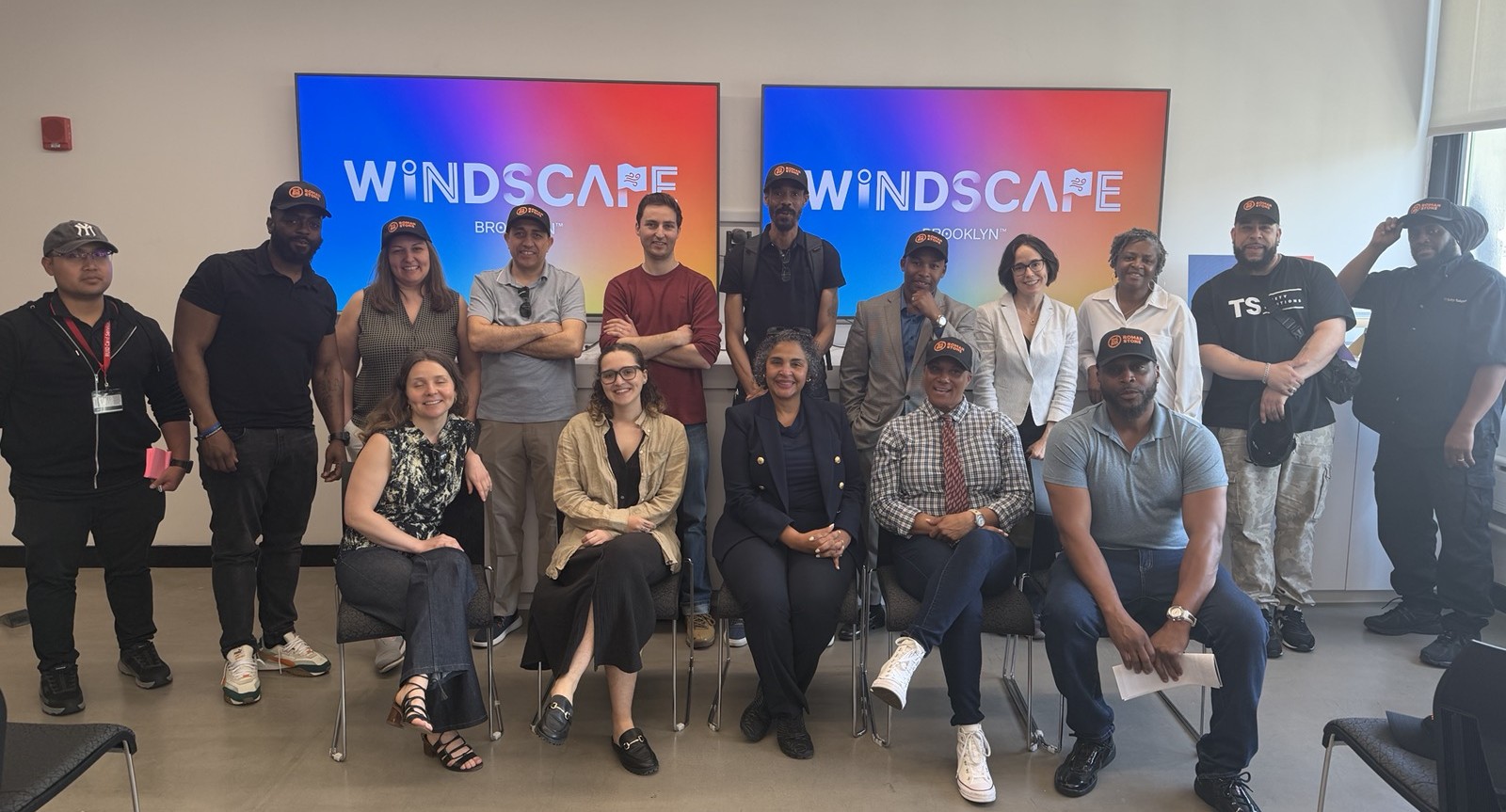
The most practical moment of the event came when attendees moved from discussion to execution.
Participants were split into two groups and challenged to compete in a mock port development project. The exercise simulated real world local content requirements, forcing teams to design both a supply chain and workforce strategy across three phases, feasibility and permitting, construction and manufacturing, and operations and maintenance.
Using structured matrices, each group mapped out what services and products could be sourced locally and how hiring would be distributed across entry level, mid level, and senior roles. The room shifted from passive listening to active problem solving.
The exercise revealed a critical truth. Local content is not theoretical. It is operational. Success depends on the ability to coordinate suppliers, workforce pipelines, and project timelines in real time.
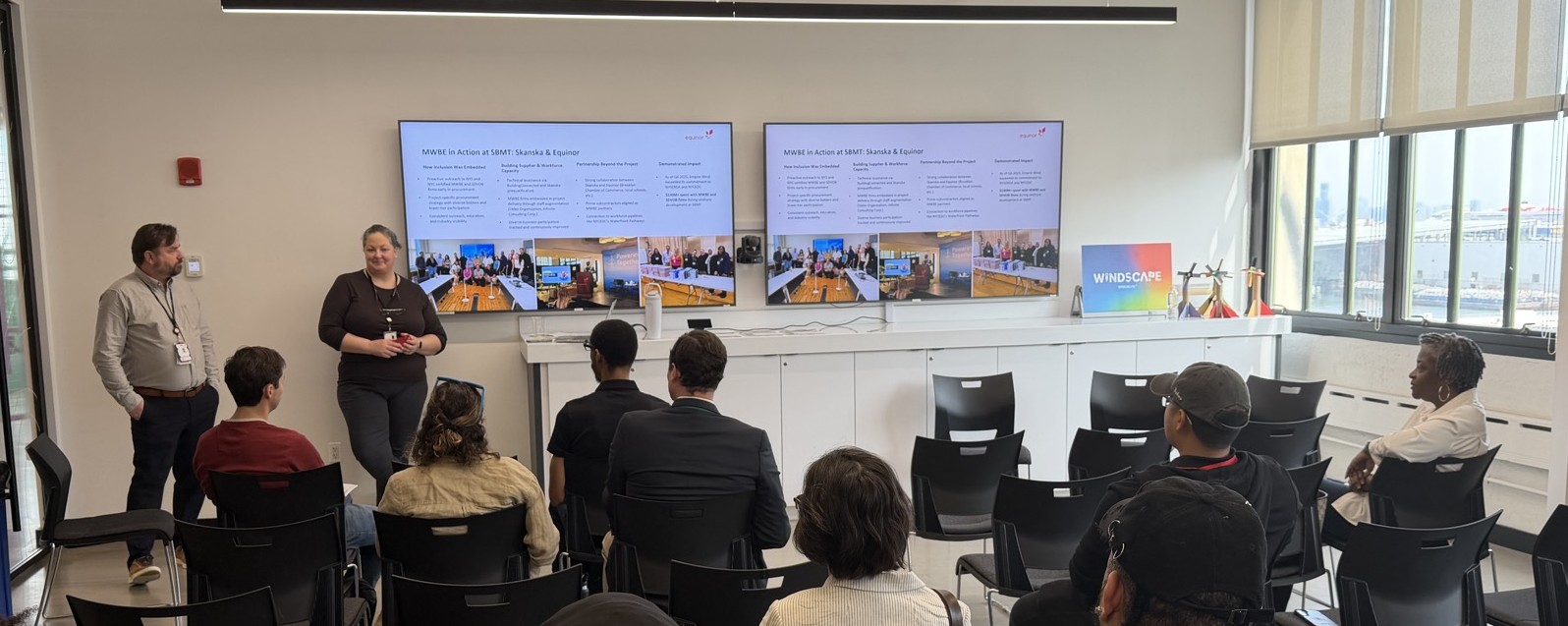
By the end of the session, a new playbook had emerged.
Developers are using local content strategies to de risk projects and strengthen stakeholder alignment. Suppliers are positioning themselves to meet verification standards and unlock access to larger contracts. Workforce organizations are aligning training programs directly with infrastructure demand.
The day, hosted at WindScape Brooklyn, was powered by Promatech, Condo Brothers Construction, and Soulful Synergy, reflecting a cross sector commitment to translating infrastructure investment into measurable local impact.
For investors and public agencies, the implication is clear. Success is no longer defined solely by project completion, but by the economic outcomes created along the way.
The maritime and ports sector is now a proving ground. The organizations that lead will not simply build infrastructure. They will build participation, trust, and long term value.
Local content is no longer a policy trend. It is the operating system for the next generation of infrastructure.
Resources and Next Steps
• Learn more about local content verification and compliance: LocalContent.com
• Explore upcoming infrastructure and maritime opportunities through regional partners
• Connect with workforce and training providers aligned to infrastructure careers
• Sign up for future events at WindScape and the Local Content Summit series: WindScape Local Content Events
.jpg)
Local Content is the Next Compliance Asset Class
LocalContent.com™ transforms how public and private sector projects meet local and domestic content requirements—with technology, data, and certification solutions that build trust, unlock funding, and prove community value.
Subscribe to Local Content
LocalContent.com Announces Upcoming AI-Driven Certification Suite to Boost Supply-Chain and Workforce Compliance, Competitiveness, and Economic Opportunity
Take the free assessment insteadLocal Content is the infrastructure compliance, risk, and trust intelligence platform that powers supplier, workforce, and community benefit investment performance data. The exact metrics governments require of developers, primes, contractors, suppliers, nonprofits, and institutional investors to approve contracts, grants, and incentives that create tangible local economic development.