Subscribe to Local Content
LocalContent.com Announces Upcoming AI-Driven Certification Suite to Boost Supply-Chain and Workforce Compliance, Competitiveness, and Economic Opportunity
Take the free assessment instead

Arkansas’ Lithium Boom Could Redefine America’s Battery Supply Chain
.jpg)
.jpg)

.png)
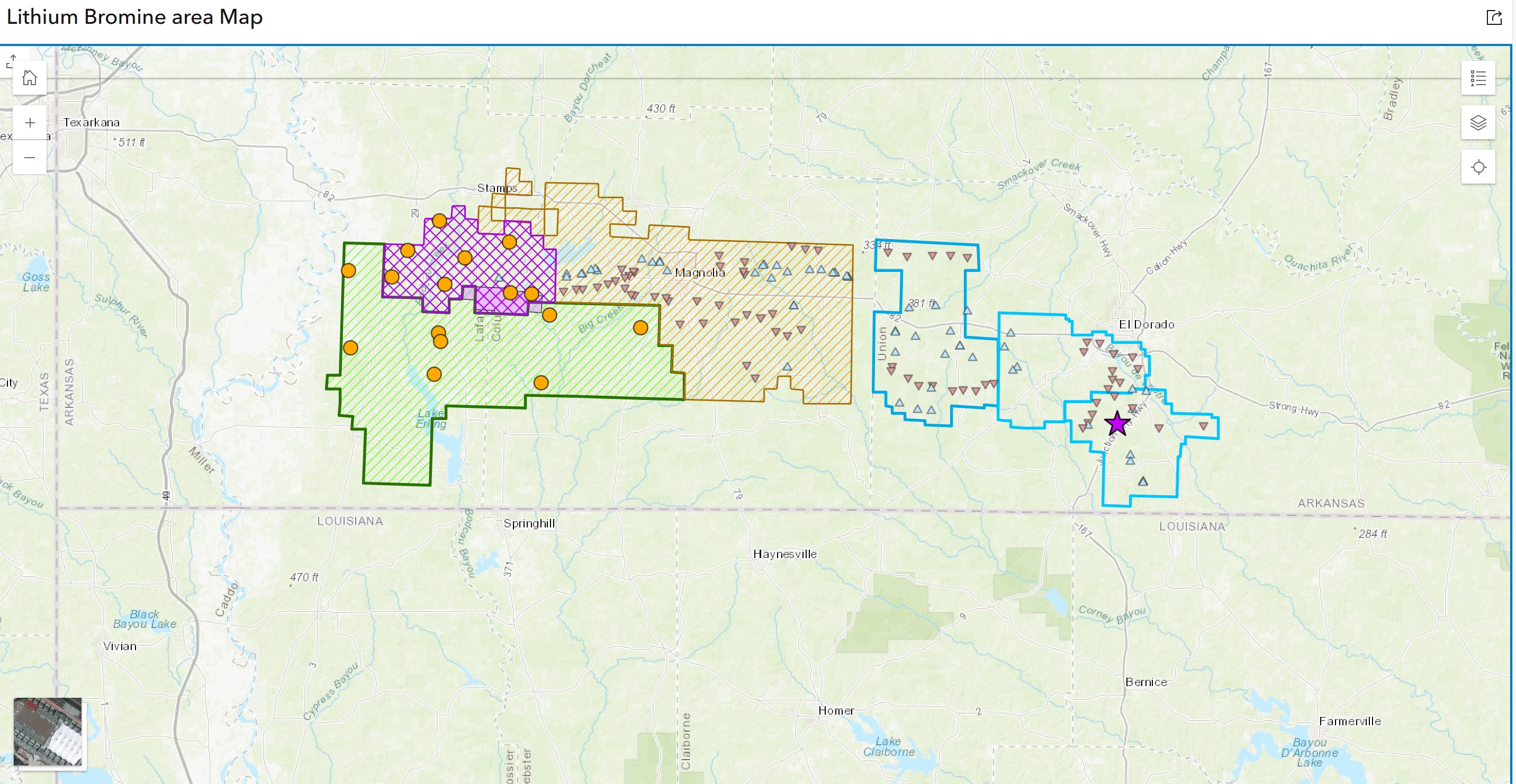
Arkansas is emerging as one of the most strategically important lithium regions in the United States, positioning the state at the center of the global battery economy just as demand accelerates.
Beneath south Arkansas lies the Smackover Formation, a massive underground brine reservoir that industry estimates could hold enough lithium to supply between 5 and 10 percent of projected global demand by 2030. Early assessments suggest lithium concentrations of 150 to 400 milligrams per liter, levels considered commercially viable. With lithium prices fluctuating between $20,000 and $35,000 per metric ton in recent years, even conservative production scenarios point to billions of dollars in long term economic value.
Major energy and materials companies have already committed significant capital. Combined announced investments for Arkansas lithium development exceed $3 billion, with pilot projects targeting commercial production as early as 2026. Full scale operations could generate more than $1.5 billion annually in direct economic output once stabilized, according to industry aligned estimates.
The economic impact extends well beyond extraction. Lithium production requires chemical processing, water treatment, logistics, quality control, and advanced manufacturing inputs. State economic models project between 2,500 and 4,000 direct jobs across extraction and processing, with average annual wages ranging from $65,000 for skilled technicians to more than $120,000 for engineers and plant managers. When indirect and induced employment is included, total job creation could exceed 10,000 statewide.
Workforce alignment may be Arkansas’s greatest competitive advantage. South Arkansas already supports more than 30,000 workers with experience in oil and gas, chemicals, and industrial operations. Many of the required lithium roles overlap directly with existing skills in drilling, fluid handling, automation, and safety compliance. Retraining timelines are measured in months, not years.
Community colleges and workforce boards are moving quickly. New certificate programs in process technology, instrumentation, and industrial maintenance are designed to support lithium operations, with early cohorts expected to graduate in 2026. Apprenticeship pipelines tied directly to employers could reduce labor shortages while keeping talent local.
The stakes are national as well as regional. The United States currently imports more than 80 percent of its lithium. A scaled Arkansas supply would materially reduce dependence on foreign sources and strengthen domestic battery manufacturing, an industry projected to exceed $400 billion globally by 2035.
If executed with disciplined workforce planning and community engagement, Arkansas lithium will not be a short term resource play. It will be a long term industrial transformation anchored in jobs, resilience, and strategic relevance.


.png)

Local Content is the Next Compliance Asset Class
LocalContent.com™ transforms how public and private sector projects meet local and domestic content requirements—with technology, data, and certification solutions that build trust, unlock funding, and prove community value.
Subscribe to Local Content
LocalContent.com Announces Upcoming AI-Driven Certification Suite to Boost Supply-Chain and Workforce Compliance, Competitiveness, and Economic Opportunity
Take the free assessment insteadCompanies and projects struggle to prove economic benefits that stay in the communities infrastructure is built to power, costing them contracts, grants, and incentives. We help them demonstrate readiness, compliance, and credibility through our suite of Local Content Certifications.