Subscribe to Local Content
LocalContent.com Announces Upcoming AI-Driven Certification Suite to Boost Supply-Chain and Workforce Compliance, Competitiveness, and Economic Opportunity
Take the free assessment instead

Energy NL 2026: Why Local Content Has Become the New Energy Battleground
%20(2).png)

.png)
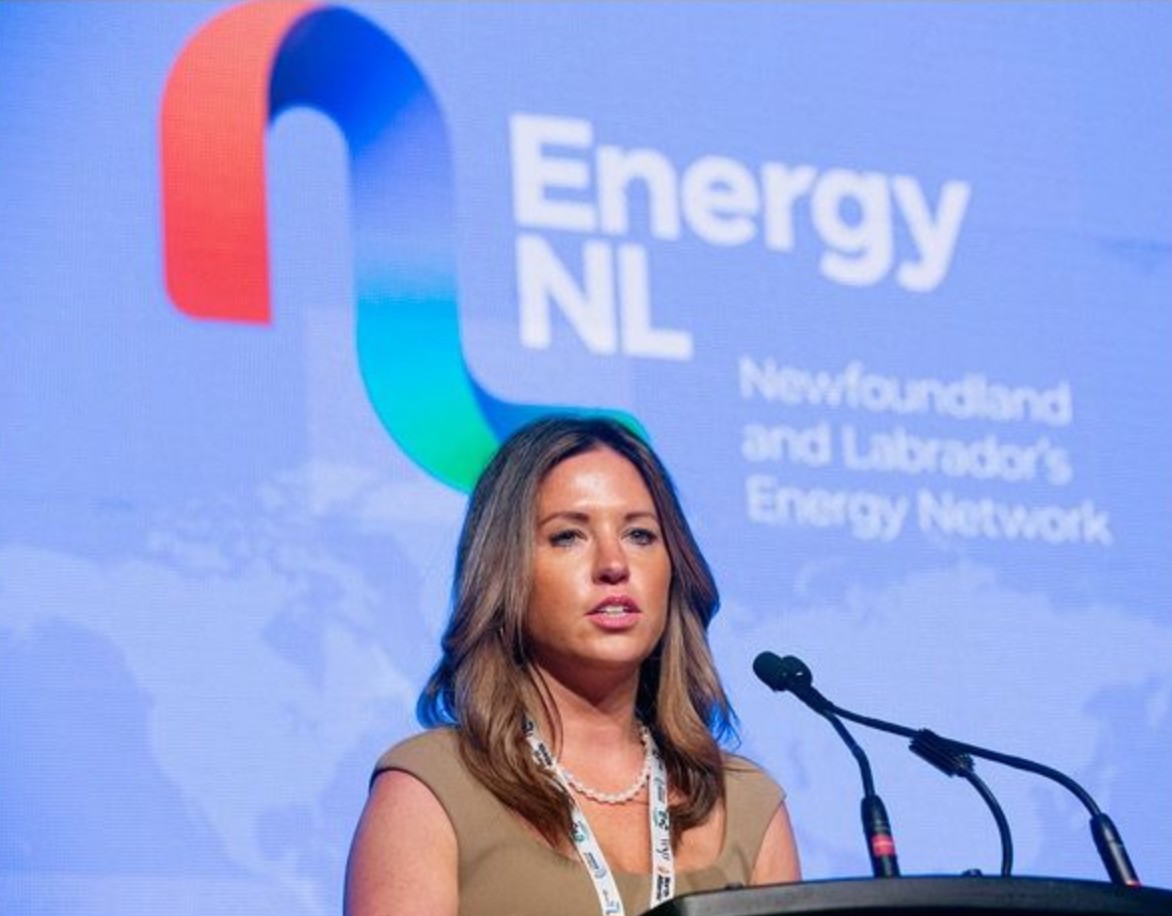
ST. JOHN'S, NEWFOUNDLAND — While much of the global energy conversation remains focused on production targets, carbon reduction, and energy security, a different discussion took center stage at the Energy NL Conference & Exhibition 2026. The topic was local content.
The annual gathering brought together government officials, multinational energy companies, labor leaders, technology providers, and supply chain executives to examine one of the most important questions facing resource development today:
How can regions capture more value from the projects taking place within their own borders?
The answer increasingly lies in local content strategies that connect investment, workforce development, procurement, and economic participation.
Premier Tony Wakeham opened the conference by reinforcing Newfoundland and Labrador's role as a major energy producing jurisdiction while highlighting opportunities for future investment and offshore development. Industry leaders followed with updates on global energy markets, offshore operations, and emerging opportunities across the province.
Yet one of the most significant conversations of the event focused on something that extends far beyond Newfoundland and Labrador.
It focused on who benefits.
Across the world, governments, communities, and industry leaders are asking whether large scale energy investments are creating measurable opportunities for local workers, local businesses, and local economies. Increasingly, investors and policymakers want more than production numbers. They want evidence of participation.
That conversation was reflected in a panel featuring Zach Kaplan of Teneo, Andrew Corbett of BW Offshore, and Matt Adams of NetBenefit Software, who explored how local content is reshaping the global energy industry and how organizations can better measure and monitor its impact.
The discussion highlighted a growing reality.
Local content is no longer simply a regulatory requirement. It is becoming a competitive advantage.
Companies that can demonstrate strong local workforce participation, supplier engagement, skills development, and community investment are increasingly viewed as lower risk, more sustainable partners by governments and stakeholders alike.
The conference also highlighted the connection between workforce development and long term economic resilience.
Lana Payne, National President of Unifor, addressed attendees on the role workers play in supporting Canada's economy and energy future. Her remarks emphasized the importance of workforce readiness, labor participation, and economic growth at a time when energy markets continue to evolve.
Those themes carried into discussions about Indigenous engagement, regulatory modernization, inclusion, and the future workforce required to support major infrastructure and energy projects.
Taken together, the conversations reflected a broader shift occurring across the global energy sector.
For decades, energy success was measured primarily by production volumes and capital investment.
Today, success is increasingly measured by outcomes.
How many local companies secured contracts?
How many workers gained employment?
How much revenue remained within the region?
How many skills were developed that can support future generations?
These are the questions that governments, investors, and communities are beginning to ask with greater urgency.
Energy NL represents approximately 500 member organizations involved throughout the energy value chain, from offshore operators and engineering firms to training providers, technology companies, fabricators, and professional services organizations.
That diversity reflects the reality that modern energy development extends far beyond the companies extracting resources. It includes the entire ecosystem required to support projects and maximize economic participation.
As the conference moves into its second day, discussions are expected to continue around regulatory frameworks, workforce development, Indigenous inclusion, and the evolving energy landscape.
But perhaps the most important takeaway from the event is this:
The future of energy will not be judged solely by what is produced.
It will increasingly be judged by who participates.
In a world where governments and communities are demanding measurable economic impact, local content has moved from the sidelines to the center of the conversation.
And if the discussions at Energy NL 2026 are any indication, that conversation is only beginning.



Local Content is the Next Compliance Asset Class
LocalContent.com™ transforms how public and private sector projects meet local and domestic content requirements—with technology, data, and certification solutions that build trust, unlock funding, and prove community value.
Subscribe to Local Content
LocalContent.com Announces Upcoming AI-Driven Certification Suite to Boost Supply-Chain and Workforce Compliance, Competitiveness, and Economic Opportunity
Take the free assessment insteadCompanies and projects struggle to prove economic benefits that stay in the communities infrastructure is built to power, costing them contracts, grants, and incentives. We help them demonstrate readiness, compliance, and credibility through our suite of Local Content Certifications.