Subscribe to Local Content
LocalContent.com Announces Upcoming AI-Driven Certification Suite to Boost Supply-Chain and Workforce Compliance, Competitiveness, and Economic Opportunity
Take the free assessment instead

Boston Secures Nearly $48 Million Community Benefits Agreement for Everett Stadium Project
.jpg)

.jpg)
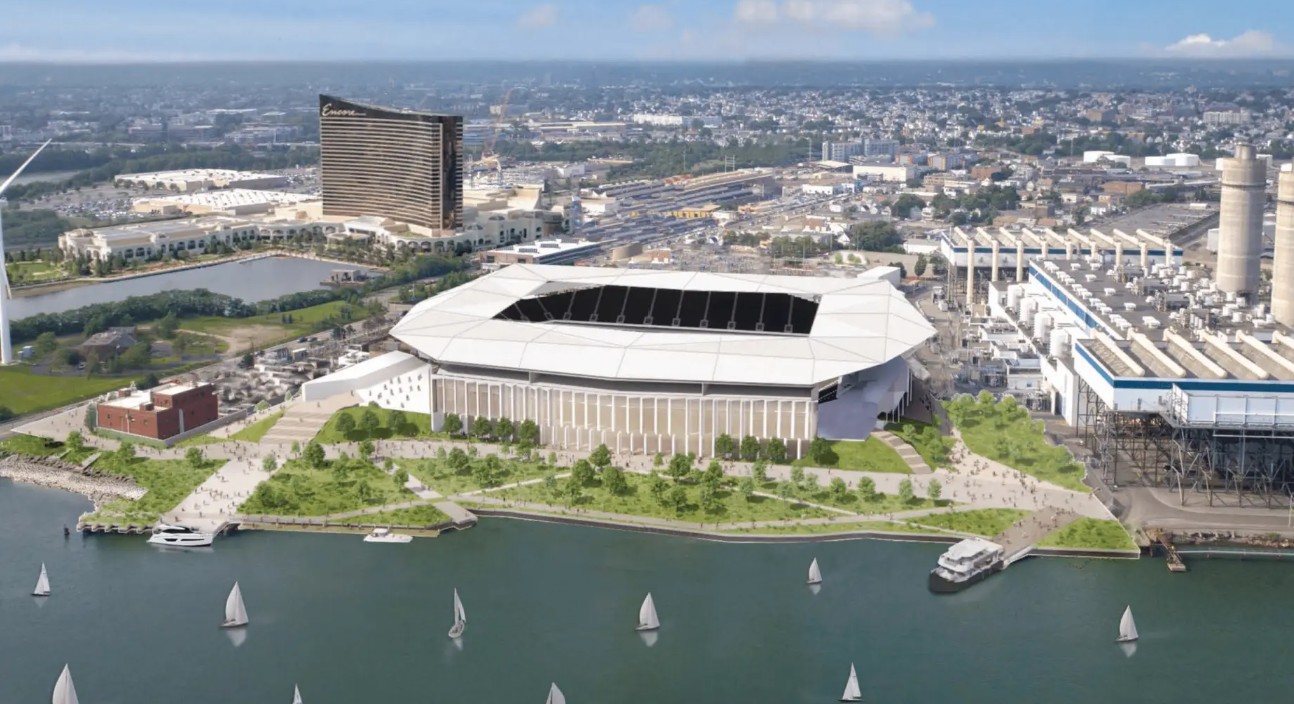
Boston has locked in a high-stakes community benefits agreement tied to the Kraft Group’s proposed stadium project in Everett, one that city leaders say will deliver nearly $48 million in value to Boston over the next 15 years, while forcing stricter accountability for traffic, public safety, and climate resilience impacts expected to be felt most acutely in Charlestown.
The agreement blends direct cash payments with a new, permanent ticket-based revenue stream, infrastructure upgrades, and operational safeguards designed to prevent the stadium from exporting its costs onto Boston residents. It also represents a major shift from earlier negotiations. The Kraft Group’s initial mitigation proposal to the City was a $750,000 one-time payment, compared with the final package that includes $13 million in direct payments and a long-term revenue mechanism expected to generate $34 million within the first 15 years of stadium operations.
The deal was reached under the framework of the Mass Leads Act, the state’s 2024 economic development bill, which required the Kraft Group to secure community benefits agreements with both Boston and Everett in order for the stadium project to advance.
For Charlestown, the agreement delivers dedicated funding through an existing community mitigation structure. The Kraft Group will provide $3 million over six years to the Charlestown Community Impact Fund, a fund created in 2016 that distributes annual mitigation support tied to the Encore casino and finances local neighborhood organizations. In addition, the City expects future annual ticket revenues of roughly $2 million per year, with at least half required to go to Charlestown-specific municipal projects.
The financial package includes several defined components. Upon completion of the MEPA permitting process, the Kraft Group will make an immediate $1.5 million community impact payment, followed by $300,000 annually for five years, totaling $3 million in upfront impact funds. Separately, the company will establish a $5 million transportation fund, paid as $333,000 annually for 15 years, earmarked for transportation infrastructure improvements in Charlestown. Beyond those payments, the Kraft Group will also commit to at least $5 million in roadway and transit-area improvements in and around Sullivan Square, Main Street, and Route 99, including sidewalks, intersections, bike paths, and transit access, prior to opening day.
To create ongoing mitigation revenue, the stadium will trigger new ticket surcharges paid to the City in perpetuity. The surcharges include $1 per soccer ticket, indexed to CPI, and 1.5% of every concert ticket sold. The parties estimate this will generate about $2 million in the first year and roughly $34 million over the first 15 years.
Operationally, the agreement requires an annual Traffic and Parking Management Plan approved by Boston, designed to prevent stadium traffic from cutting through Sullivan Square. The Kraft Group will also reimburse the City for all event-day public safety and transportation management costs, including staffing of approximately 38 police officers per event. The agreement further requires funding for annual traffic data monitoring, a Bluebikes valet service on event days, and construction of a water ferry dock.
The stadium must meet 2070 flood resilience standards, include noise mitigation to comply with the city’s 70-decibel limit, prevent light spill into nearby neighborhoods, and prioritize sustainability features aligned with zero net carbon operational goals. Local hiring and procurement targets are also built into the agreement, including a goal that 25% of permanent stadium jobs go to Boston residents through preferential hiring, and that 25% of construction and ongoing operational contracts be directed to local minority-owned, women-owned, and veteran-owned businesses.


Local Content is the Next Compliance Asset Class
LocalContent.com™ transforms how public and private sector projects meet local and domestic content requirements—with technology, data, and certification solutions that build trust, unlock funding, and prove community value.
Subscribe to Local Content
LocalContent.com Announces Upcoming AI-Driven Certification Suite to Boost Supply-Chain and Workforce Compliance, Competitiveness, and Economic Opportunity
Take the free assessment insteadLocal Content is the infrastructure compliance, risk, and trust intelligence platform that powers supplier, workforce, and community benefit investment performance data. The exact metrics governments require of developers, primes, contractors, suppliers, nonprofits, and institutional investors to approve contracts, grants, and incentives that create tangible local economic development.