Subscribe to Local Content
LocalContent.com Announces Upcoming AI-Driven Certification Suite to Boost Supply-Chain and Workforce Compliance, Competitiveness, and Economic Opportunity
Take the free assessment instead

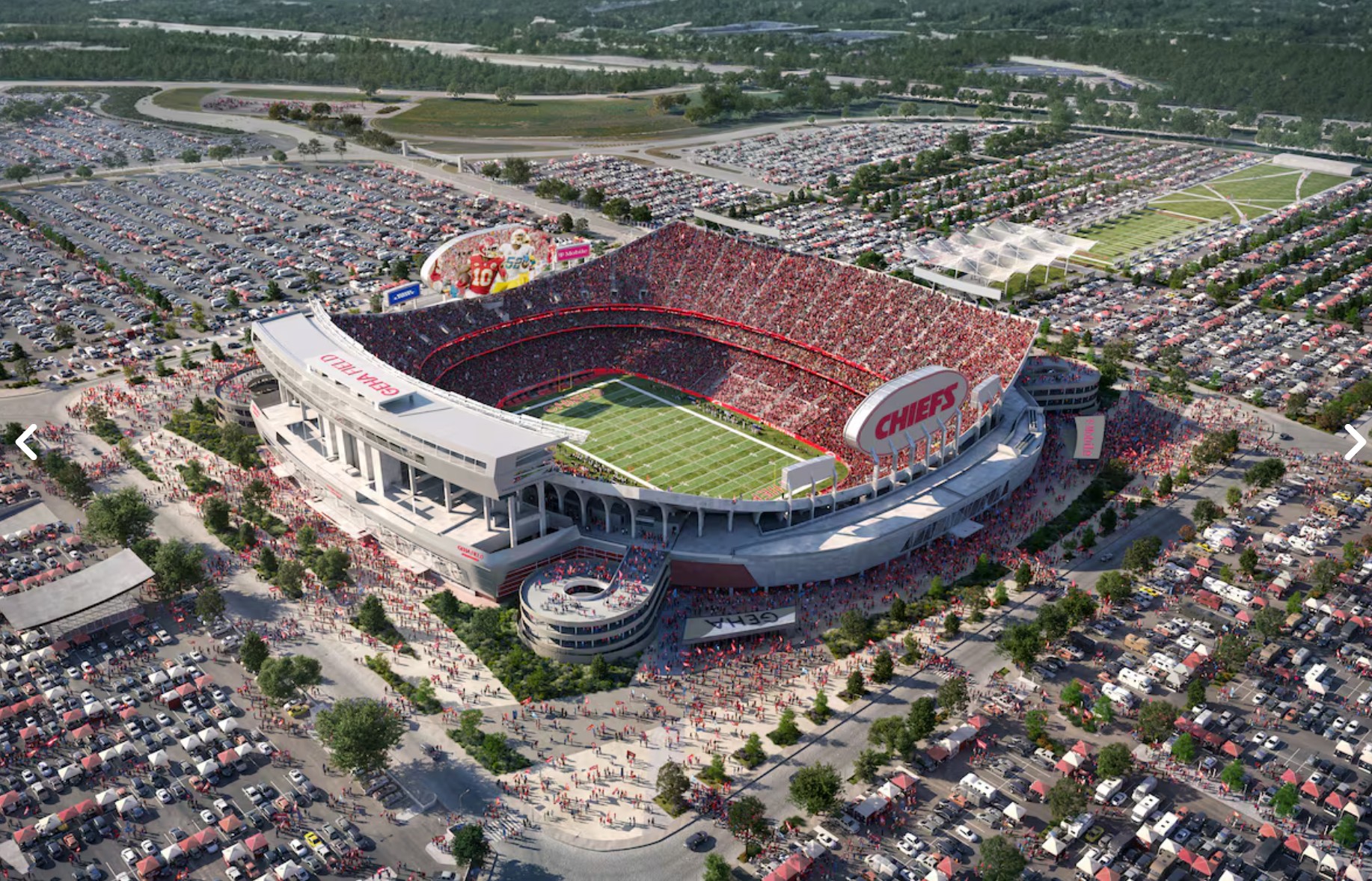
Kansas’ $3 Billion Chiefs Dome Isn’t Just a Stadium. It’s a Local Opportunity Engine.
.jpg)

.png)
Kansas and the Kansas City Chiefs have outlined the framework for a massive public-private project that could reshape the region’s economy: a new $3 billion domed NFL stadium, a team headquarters and practice facility, and a mixed-use development district stretching across Wyandotte and Johnson counties. The agreement is currently a nonbinding term sheet, but it sets the direction for what could become one of the largest stadium-driven development deals in the country.
Phase One focuses on the stadium itself. Plans call for a state-of-the-art domed facility with at least 65,000 seats near the I-70 and I-435 interchange, targeting an opening date of August 1, 2031. Kansas would fund up to $1.8 billion, capped at 60% of total costs, using STAR bonds backed by new sales tax revenue generated inside the stadium district. The Chiefs would pay the remaining 40% and cover any cost overruns. The stadium would be publicly owned by a government or quasi-government entity, while the Chiefs would operate it through a long-term agreement that includes annual rent starting at $7 million, increasing with inflation. The team would commit to playing home games there for at least 30 years, with non-relocation provisions and repayment penalties if it leaves early.
Phase Two expands the economic footprint with at least $1 billion in additional stadium-related development. This includes a new team headquarters and practice facility estimated at up to $300 million, plus retail, restaurants, hotels, housing, entertainment, office space, medical facilities, parking, and public spaces. Kansas could contribute up to $975 million through a tiered STAR bond structure, with public participation ranging from 60% to 70% depending on how much gets built. Total public funding across both phases would be capped at $2.775 billion.
For local stakeholders, this deal is about far more than football. It’s a decade-long pipeline for small business contracting, job creation, and community benefit investments, but only if local organizations move early and organize strategically.
Small business contracting will be the first major opportunity. Stadium districts require thousands of vendors, from construction trades to logistics, technology, foodservice, security, maintenance, branding, and professional services like legal and accounting. Local firms should begin preparing now by strengthening bonding and insurance capacity, securing safety certifications, forming joint ventures for larger scopes, and building a credible track record of project delivery. The sooner a local vendor network is organized, the harder it becomes to sideline it later.
Job creation is the second major lever. The best outcome for Kansas is not just short-term construction jobs but long-term career pathways. Workforce boards, unions, colleges, and nonprofits should push for workforce pipeline agreements that include apprenticeships, local hiring targets, training programs for hospitality and facilities operations, and wraparound supports that help workers stay employed.
Finally, community benefits are part of the package. The Chiefs would be required to invest in Kansas-based charitable efforts, youth sports and wellness programming, local hiring initiatives, and at least $3 million per year into a community impact fund. Local leaders should demand transparent governance, public reporting, and clearly defined priorities so the benefits are measurable and distributed fairly.
STAR bonds rely on sustained spending inside the district, meaning this project must succeed year-round, not just on game days. That makes local businesses and community partners essential. The window to secure lasting opportunity is open now.
.jpg)
_Hudson%2BRiver%2BCommunity%2BSailing%2B%2B.webp)
.jpg)
Local Content is the Next Compliance Asset Class
LocalContent.com™ transforms how public and private sector projects meet local and domestic content requirements—with technology, data, and certification solutions that build trust, unlock funding, and prove community value.
Subscribe to Local Content
LocalContent.com Announces Upcoming AI-Driven Certification Suite to Boost Supply-Chain and Workforce Compliance, Competitiveness, and Economic Opportunity
Take the free assessment insteadCompanies and projects struggle to prove economic benefits that stay in the communities infrastructure is built to power, costing them contracts, grants, and incentives. We help them demonstrate readiness, compliance, and credibility through our suite of Local Content Certifications.